Posts

Understanding DOT Class 2 Hazardous Materials: Gases Under Pressure

Image
   Definition of DOT Class 2: Gases Under Pressure Class 2 covers gaseous materials, including flammable, poisonous, and compressed gases. The formal definitions can be found at 49 CFR 173.115 . Class 2 Divisions Class 2 Materials are divided into three divisions. Division 2.1 Division 2.1 materials are flammable gases. Division 2.2 Division 2.2 materials are gases that are neither flammable nor poisonous, and are being transported under pressure. This includes compressed gases, liquified gases, pressurized cryogenic gases, compressed gases in solution, asphyxiant gases, and oxidizing gases. For most intents and purposes, Division 2.2 is a catch-all for gases that pose transportation hazards but do not fall under any other specific category. Division 2.3 Division 2.3 materials are gases which are poisonous by inhalation. Classification Testing for Potential Class 2 Materials A Class 2 material must be first qualified as a gas before any further testin...

Cinnamaldehyde Safety Guide

Image
   What is Cinnamaldehyde? Cinnamaldehyde, also known as cinnamal or cinnamon essential oil, is a naturally occurring organic compound produced by trees of the Cinnamomum genus. It is the primary compound that gives the spice cinnamon its distinctive flavor. While it is possible to create synthetic cinnamaldehyde, most is extracted by steam distillation from natural sources. Cinnamaldehyde has the CAS Number 14371-10-9. The CAS Number is used to identify cinnamaldehyde on documents including safety data sheets and chemical labels. When looking for cinnamaldehyde in a product, check for the CAS number on the associated safety documents. Notable Properties of Cinnamaldehyde Cinnamaldehyde is a liquid at room temperature, with a pale yellow to yellow-green color. It smells distinctly and strongly of cinnamon. Natural cinnamaldehyde, or cinnamon essential oil, often contains other compounds which can change some chances to the coloration or scent compared to synthetic, p...

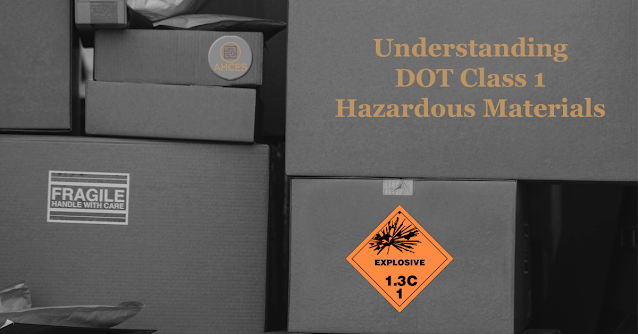
Understanding DOT Class 1 Hazardous Materials: Explosives

Image
Definition of DOT Class 1: Explosives Class 1 covers explosive materials, meaning materials that can react to cause a rapid release of heat and gases. The formal definition can be found at 49 CFR 173.50 . Class 1 Divisions Class 1 materials are divided into six divisions. Division 1.1 Division 1.1 materials are a mass explosion risk, meaning that the entire amount of material is at risk of detonating in one event. Division 1.2 Division 1.2 materials are a projection hazard which do not risk a mass explosion. Division 1.3 Division 1.3 materials have both a fire hazard and either a minor blast hazard or minor projection hazard. Division 1.3 materials do not risk a mass explosion. Division 1.4 Division 1.4 materials have a minor explosion hazard, which is generally confined to the confines of the package. Division 1.5 Division 1.5 materials have a mass explosion risk but are highly insensitive to outside stimuli initiating an explosion. Division 1.6 Division 1.6 materials have o...

Sandenol Safety Guide

Image
  What is Sandenol? Sandenol is an organic compound, also known as isobornyl cyclohexanol or 3-[5,5,6-Trimethylbicyclo[2.2.1]hept-2-yl]cyclohexan-1-ol. Sandenol is used as a synthetic sandalwood fragrance, which is beneficial as sandalwood trees have suffered from historical overharvesting. Sandenol has the CAS Number 3407-42-9. The CAS Number is used to identify sandenol as an ingredient on safety data sheets (SDS) and other safety documentation. When looking for sandenol as an ingredient in products like artificial sandalwood fragrance, look for the CAS Number in the composition table. Notable Properties of Sandenol Pure sandenol is a colorless to pale yellow liquid. It smells very similar to natural sandalwood oil and is used as synthetic substitute. What Makes Sandenol Hazardous? Sandenol is irritating to the skin and eyes. Sandenol is also toxic to aquatic life and can have long-lasting effects on the aquatic environment. Sandenol Frequently Asked Questions ...

DOT Hazmat Emergency Response Information Guide

Image
  Emergency Response Information is important for the transportation of hazardous materials, as it ensures that emergency response personnel have the correct information on how to respond to an accident. For some materials, specific personal protective equipment or fire extinguishing material is needed for safe accident response. It is the duty of the party shipping the hazardous material to appropriately relay this emergency response information. What is Emergency Response Information for Hazardous Material Shipping? Emergency response information, in the context of a hazardous material shipment, is the information that needs to be readily available to emergency response personnel in the event of an accident involving the hazardous material. This includes technical information about the hazardous material, an emergency response telephone number, and carrier information contact. The full text of the requirements can be found in  49 CFR Part 172 Subpart G . Emergency Re...

Vanillin Safety Guide

Image
  What is Vanillin? Vanillin is an benzaldehyde, also known as vanillaldehyde, vanillic aldehyde, or 4-hydroxy-3-methoxybenzaldehyde. Vanillin does occur naturally in vanilla orchids, as well as some other plants. The synthetic form of vanillin is commonly used as an artificial vanilla flavoring and fragrance. Vanillin has the CAS Number 121-33-5. The CAS Number is used to identify vanillin as an ingredient on safety data sheets (SDS) and other safety documentation. When looking for vanillin as an ingredient in products like vanilla flavoring agents, look for the CAS Number in the composition table. Notable Properties of Vanillin Vanillin in its solid form is a pale yellow, needle-shaped crystal. When dissolved in ethanol or another solvent, pure vanillin is clear. Brown vanilla extracts are typically naturally derived from the soaking of vanilla beans in ethanol to extract the soluble components. What Makes Vanillin Hazardous? Vanillin is an irritant when concentrated. It can caus...

DOT Hazmat Markings Guide

Image
  What is a DOT Marking? Markings refer to both identification markings that are material specific, as well as a set of pictograms with special instructions not otherwise covered in the Labels or Placards section. The regulations include specific fonts and sizes for letters and numerals, as well as specific pictograms and colors, for each Marking. The full text of the requirements can be found in  49 CFR Part 172 Subpart D . How is a DOT Marking Used? DOT Markings are used on all types of packages, both non-bulk and bulk, with different size requirements for clarity depending on package type. Proper Shipping Name and Identification Number There is a Proper Shipping Name and Identification Number. For each hazardous material, the proper shipping name and identification number can be found by looking it up in the § 172.101 Hazardous Materials Table. For example, if you are shipping nail polish remover that is made from pure acetone, then you would use the Proper Shipping N...